Urban study of Klaipėda suburbs
Lithuania’s major cities face a growing urban challenge – sprawling suburban settlements that attract many young families, yet the quality of life there often falls short of expectations: schools, green spaces, everyday services, and convenient transport are frequently lacking. How can such suburban sprawl be managed?
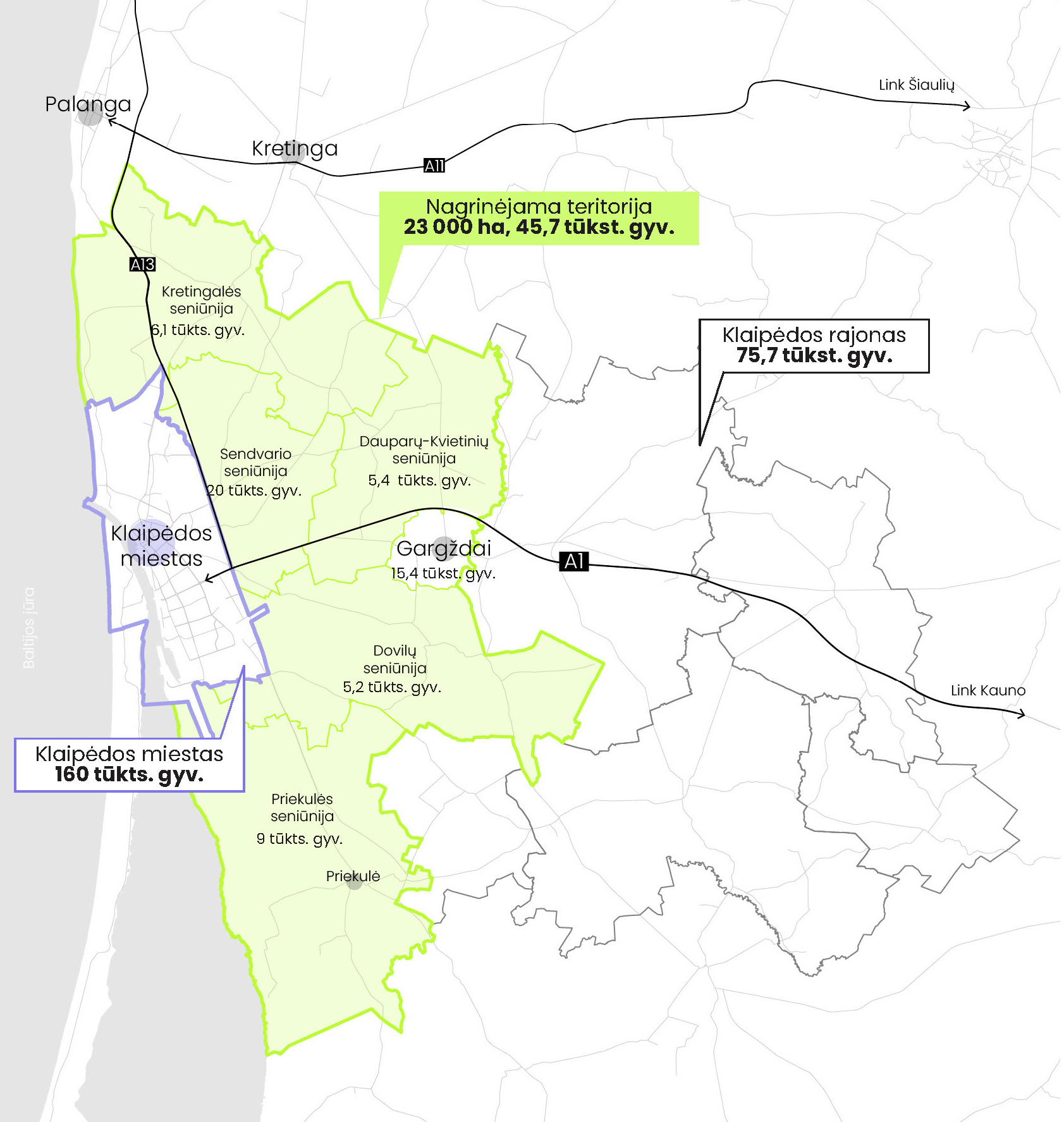
This question was raised by the Klaipėda District Municipality, where suburban areas are often considered among the most problematic. To provide a basis for planning decisions, we conducted a detailed analysis of approximately 23,000 hectares and proposed clear spatial development directions: limiting development in non-urbanised areas, strengthening local settlement centres, ensuring a balance of social infrastructure, improving sustainable mobility, and integrating the natural framework into the living environment. These guidelines will serve as a basis for revising territorial planning documents.
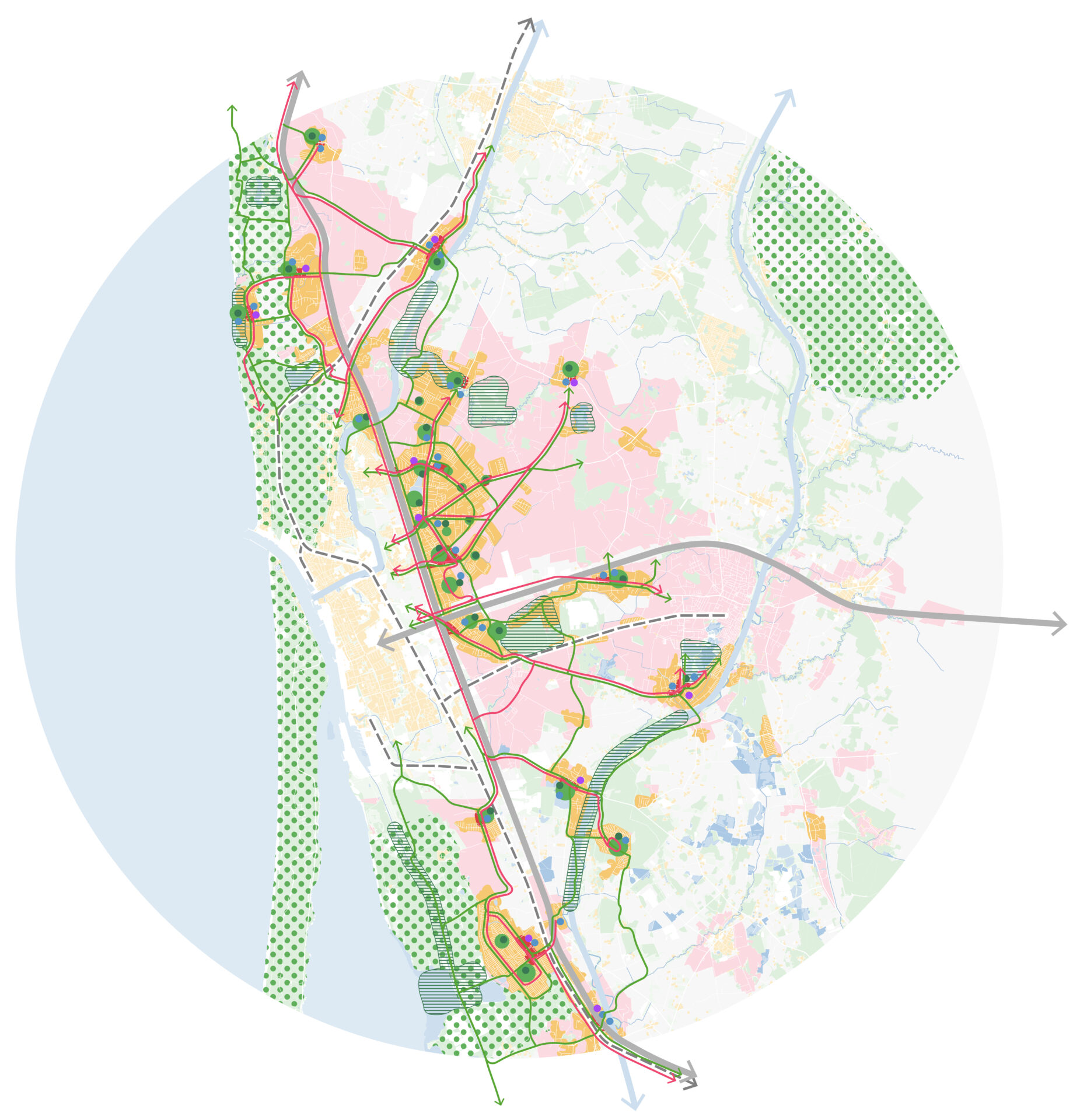
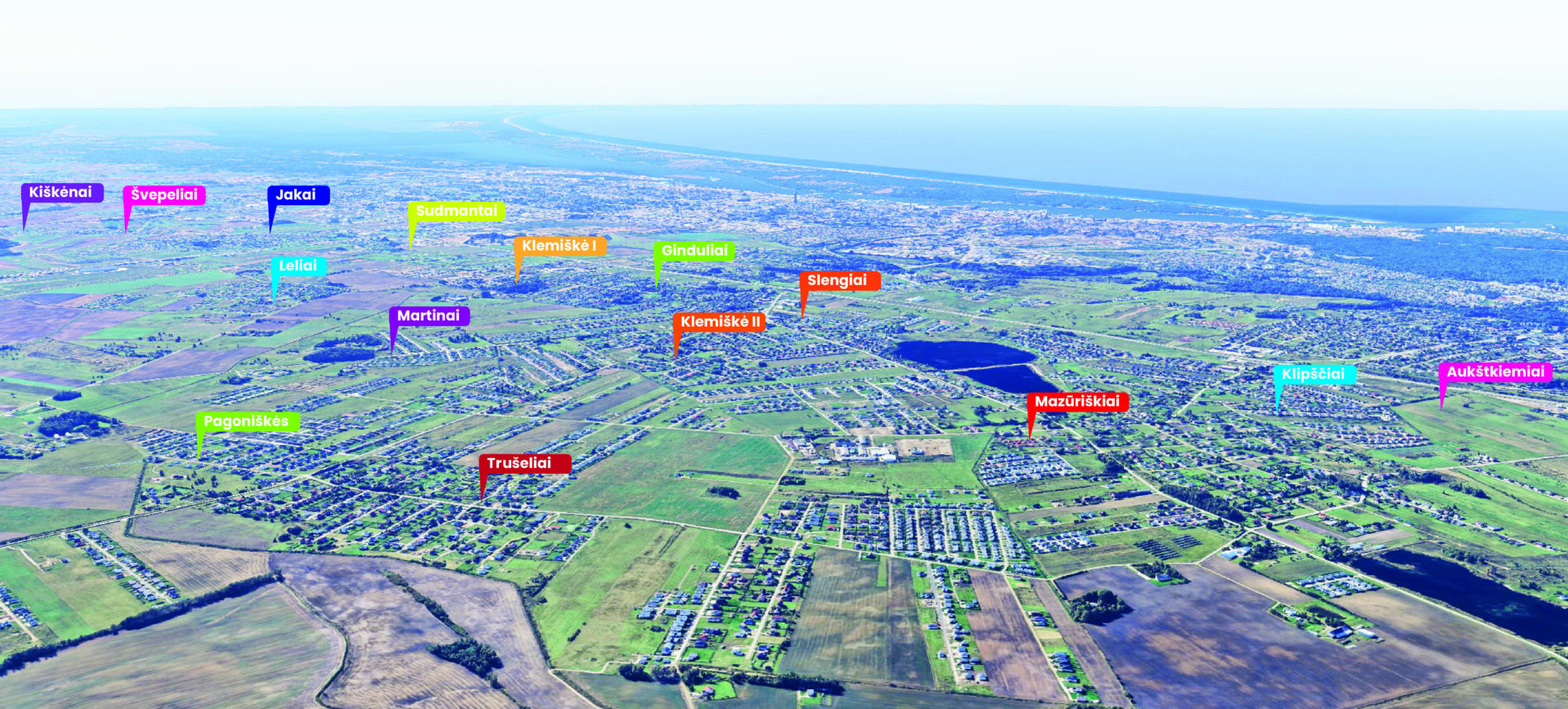
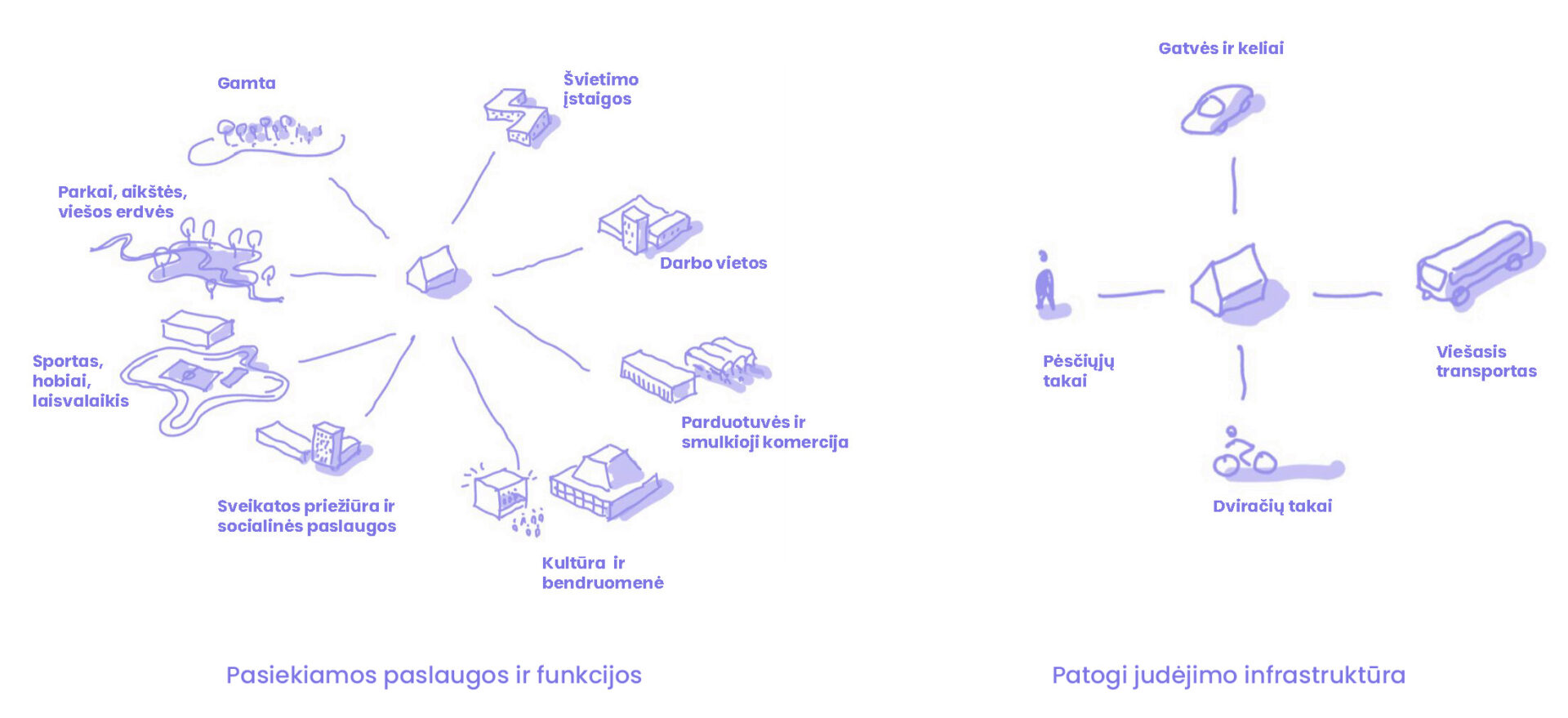
The project consisted of three stages: urban analysis, development scenarios, and recommendations. The analyses were carried out by collecting GIS data, preparing maps, and comparing territories with one another. Public opinion was also an important source of information. Development scenarios were prepared using the research by design method – based on the territorial analysis, different development alternatives were created and tested, and their comparison allowed us to formulate recommendations for more sustainable development of Klaipėda district’s suburban areas.
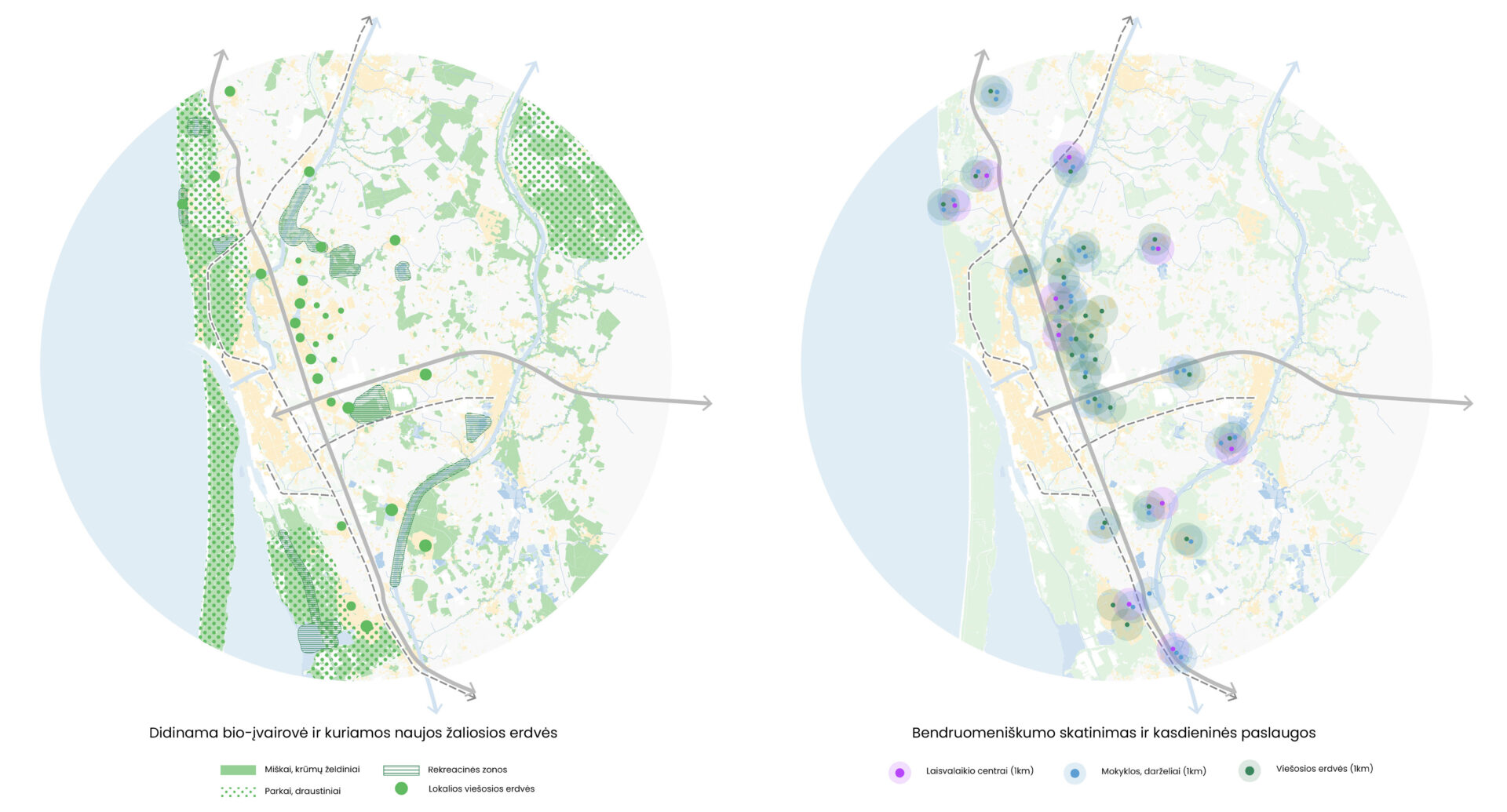
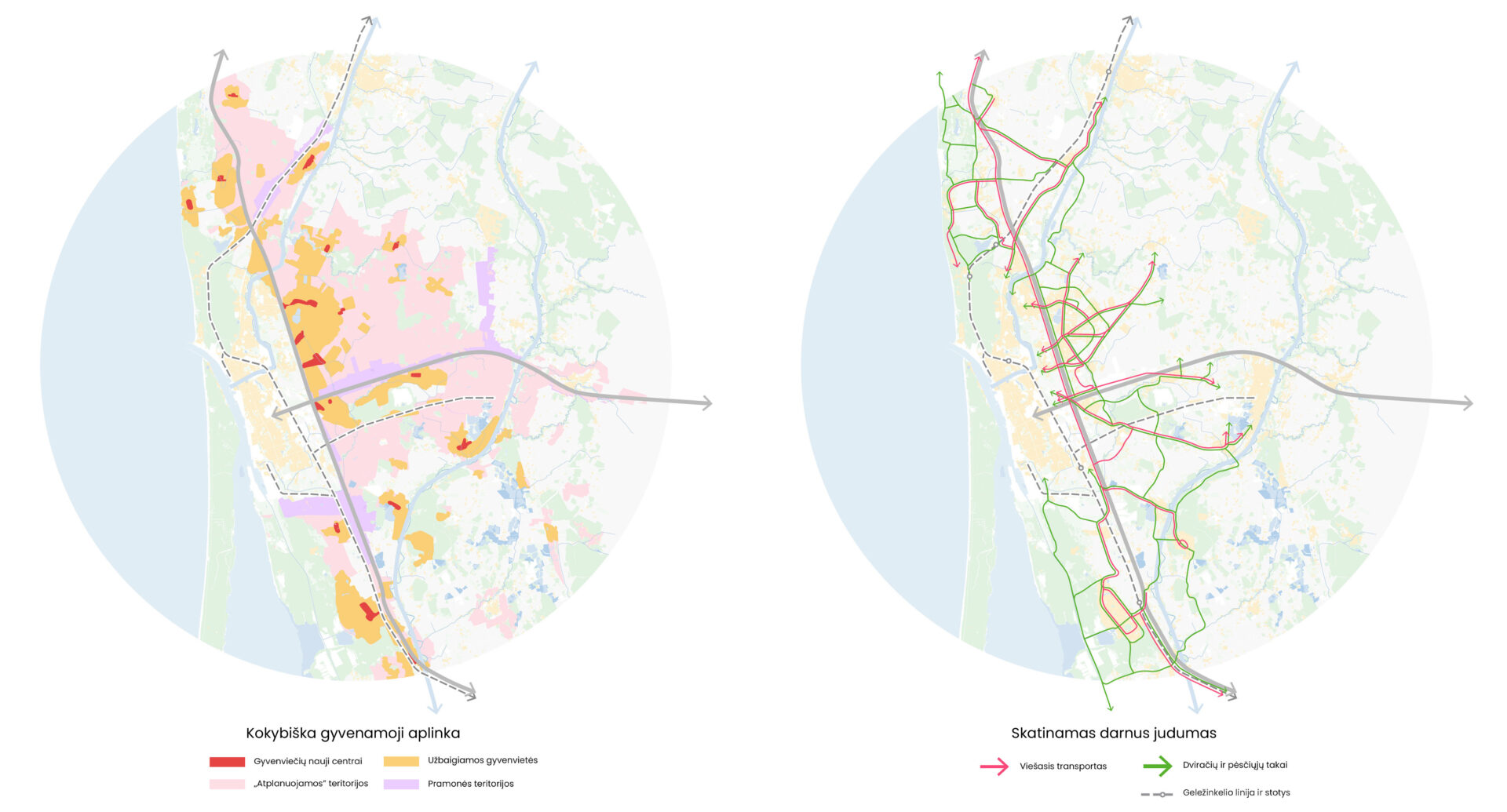
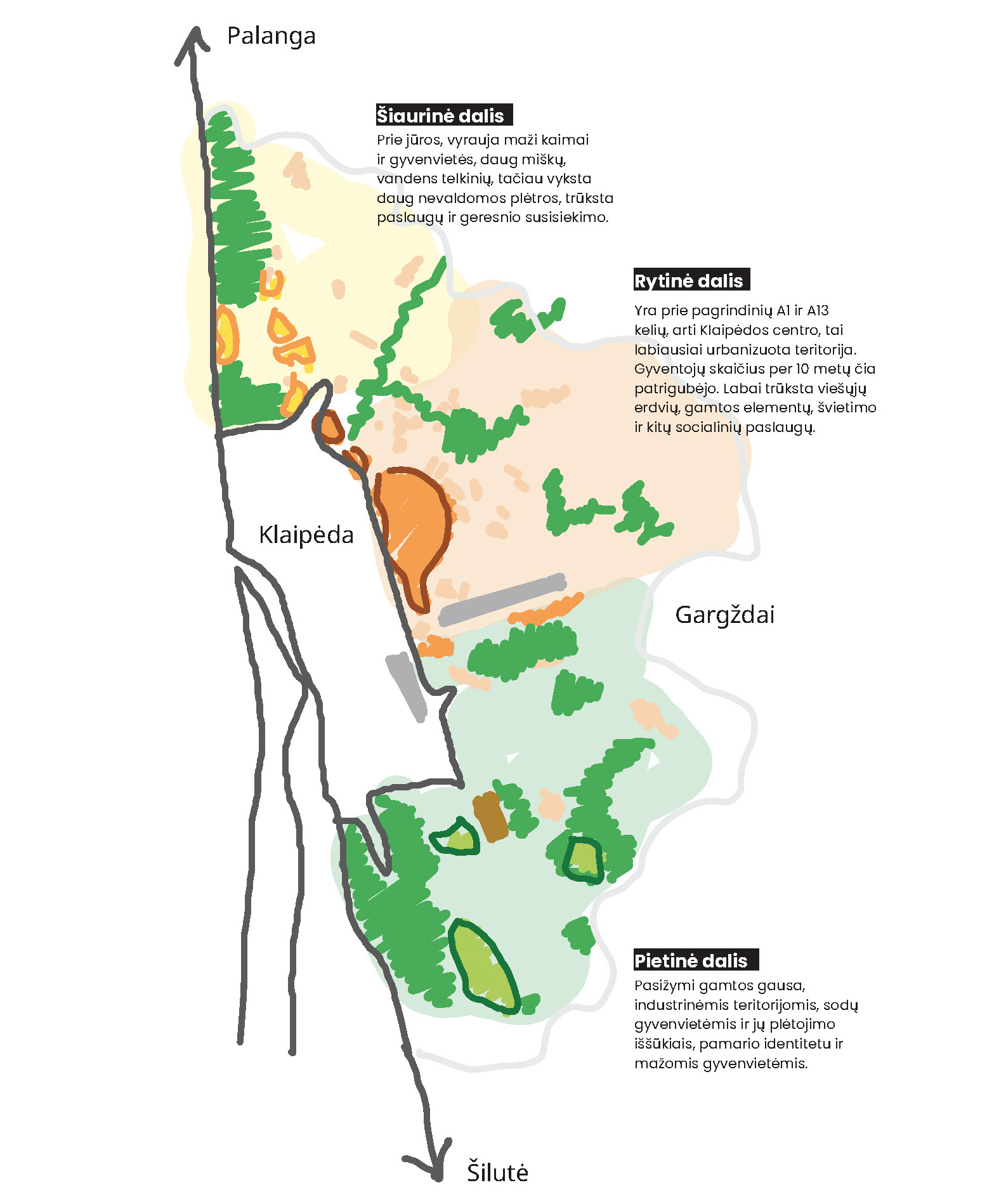
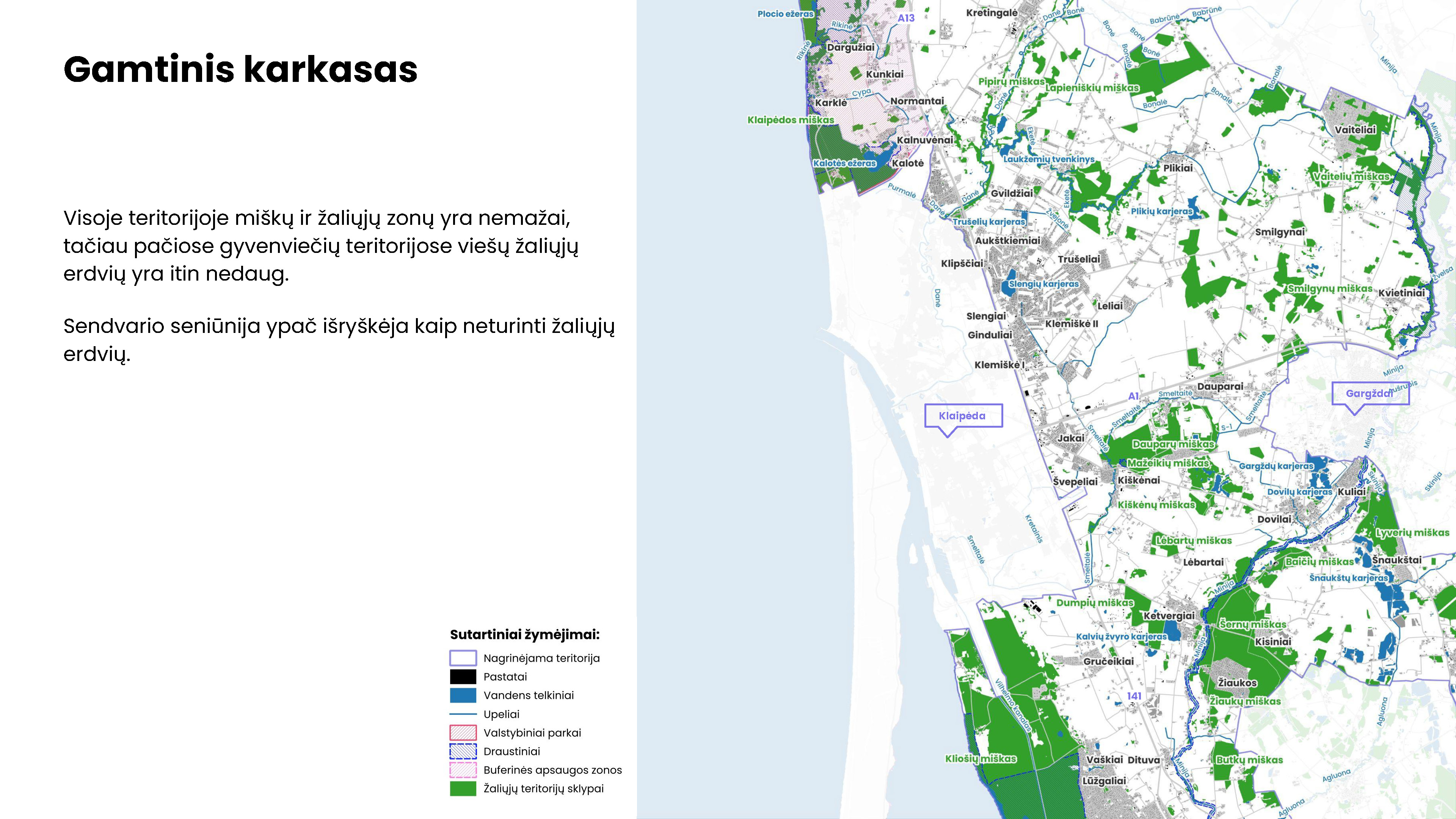
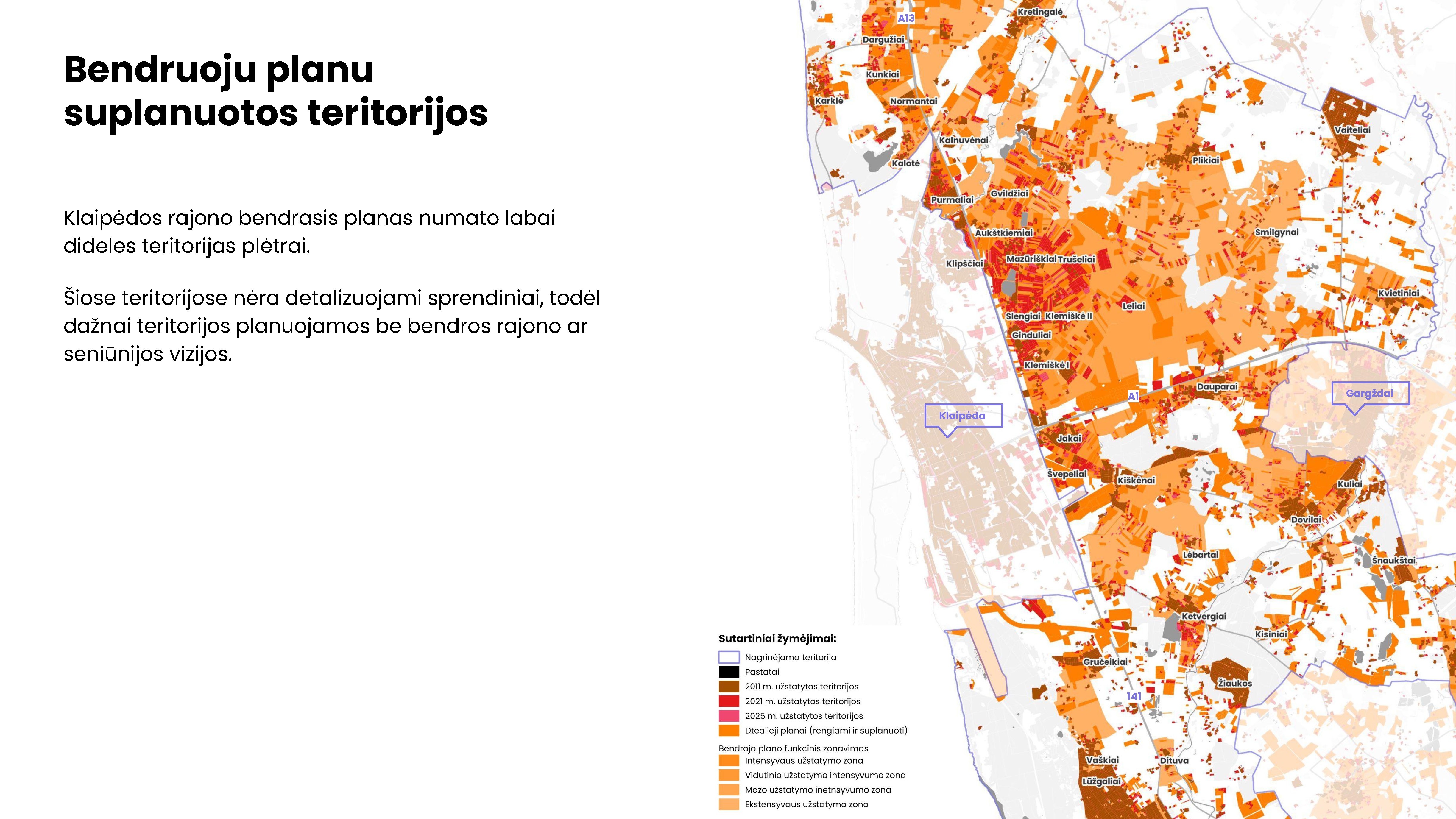
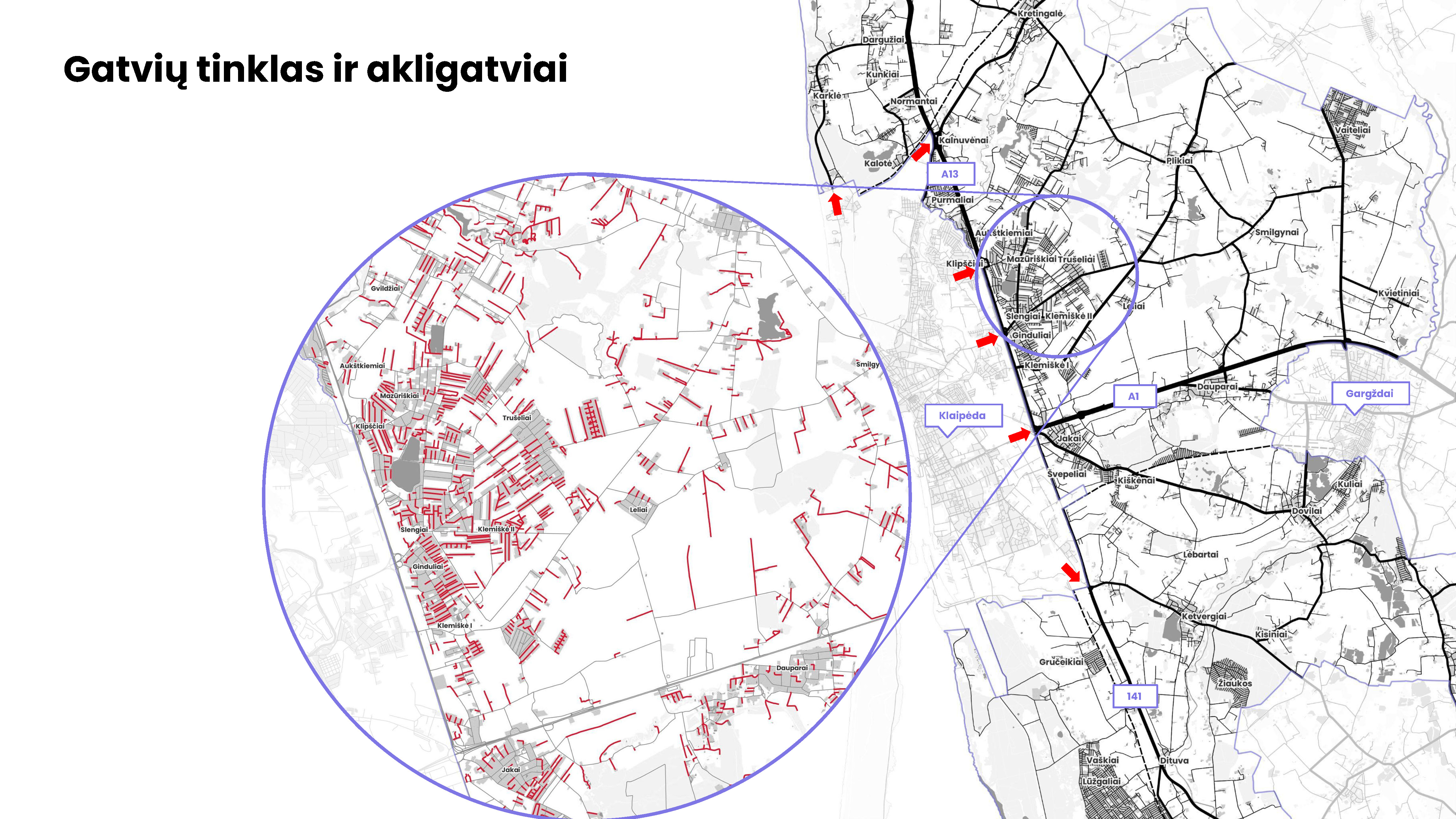
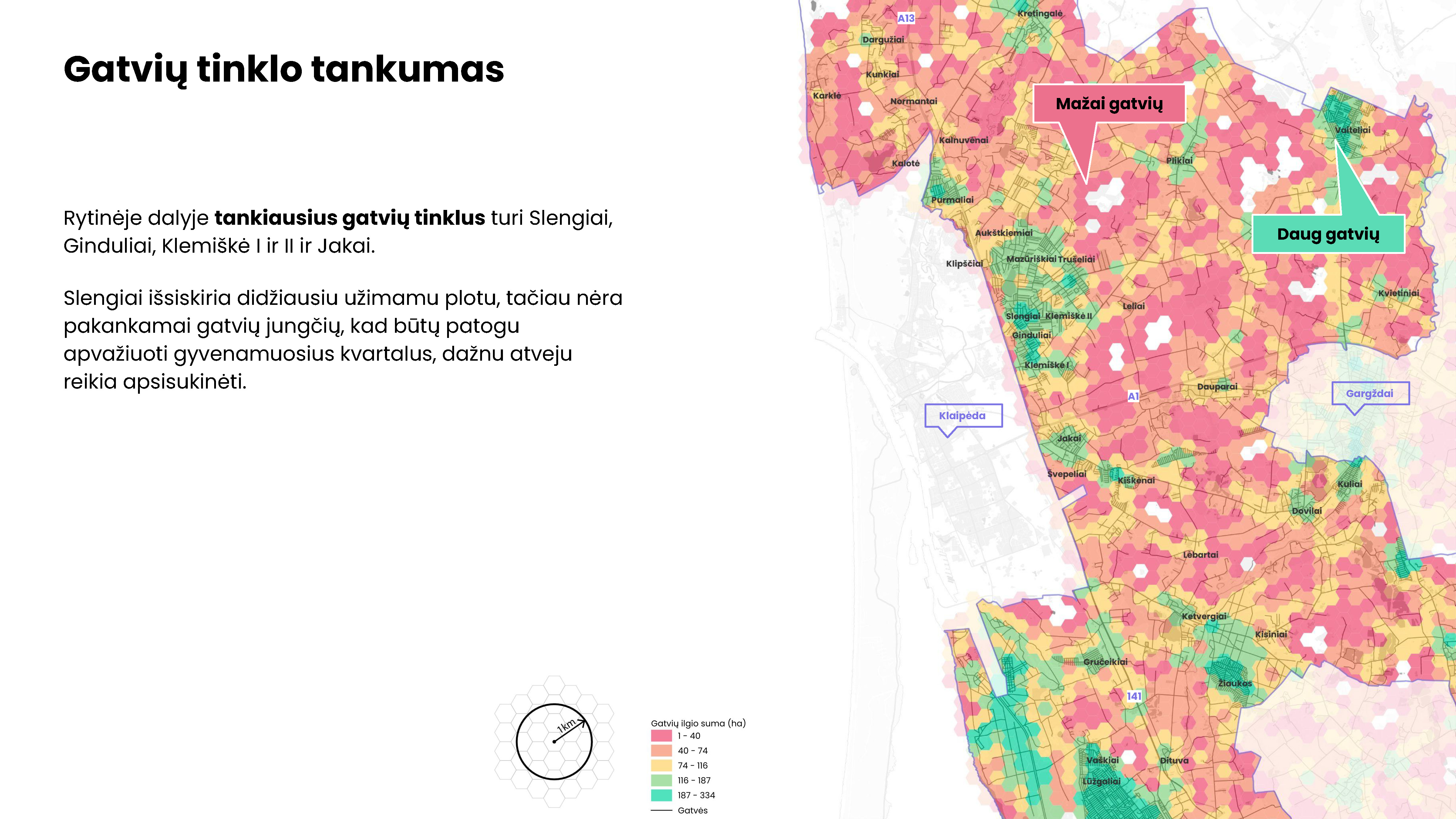
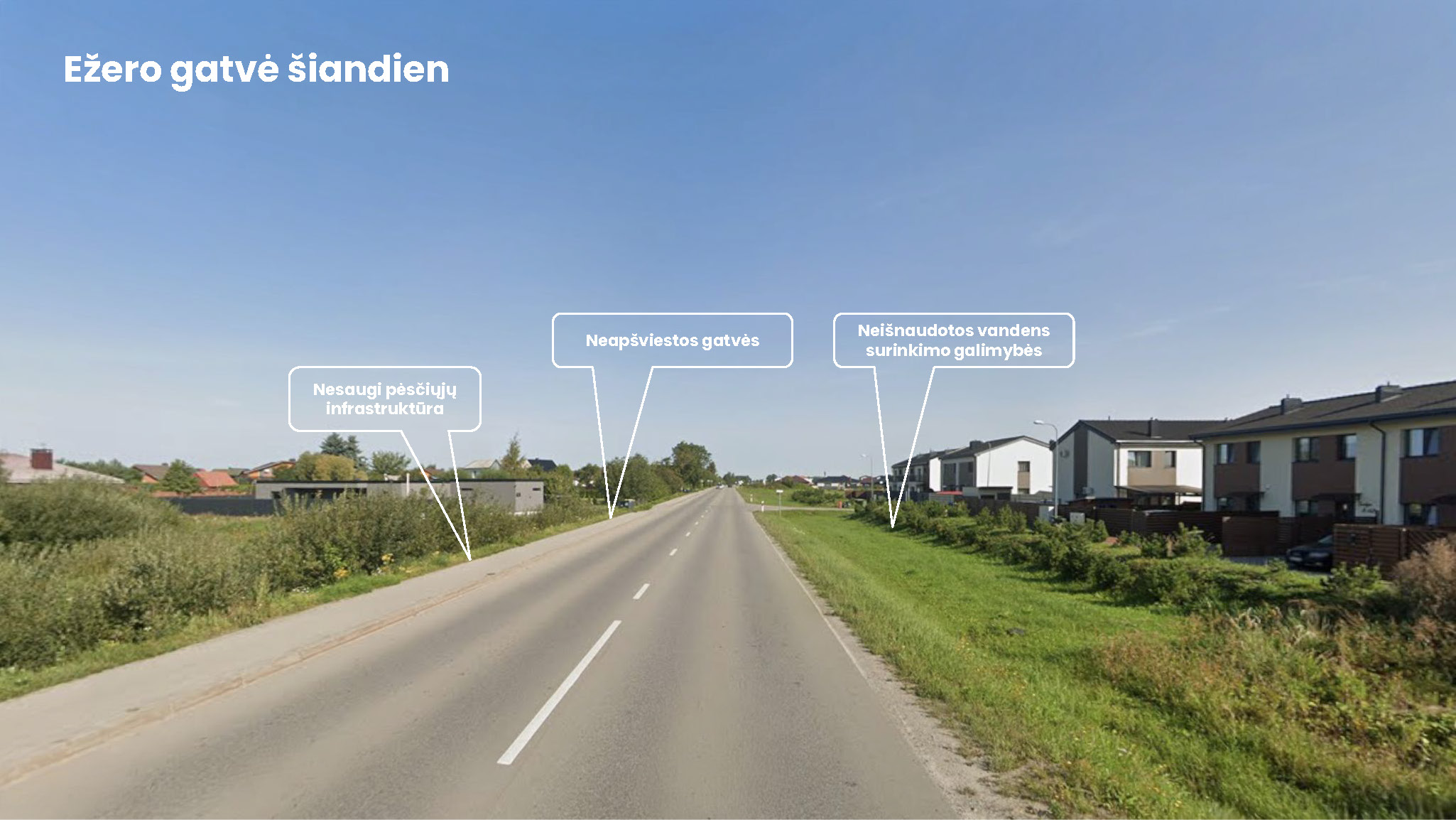
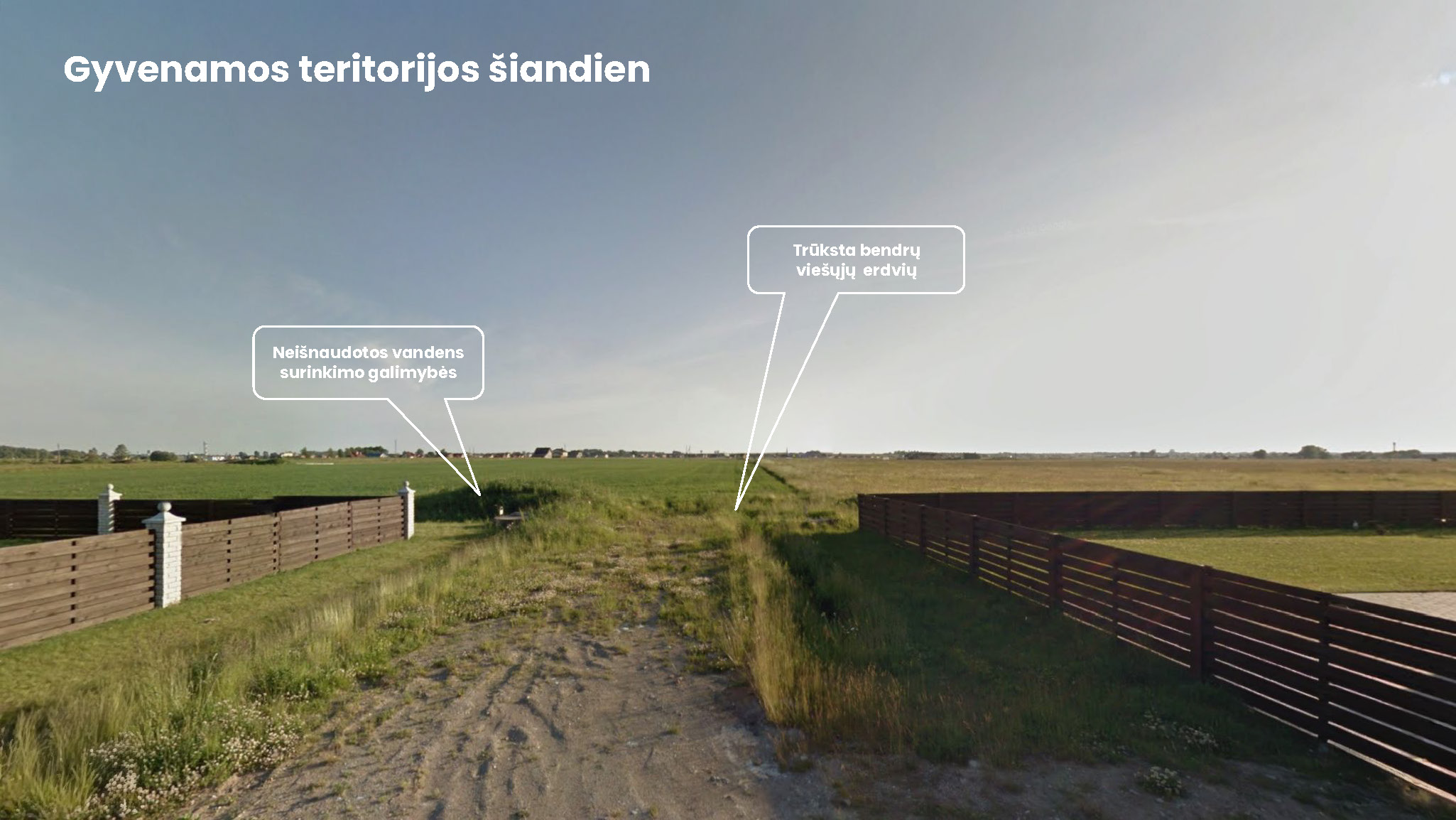
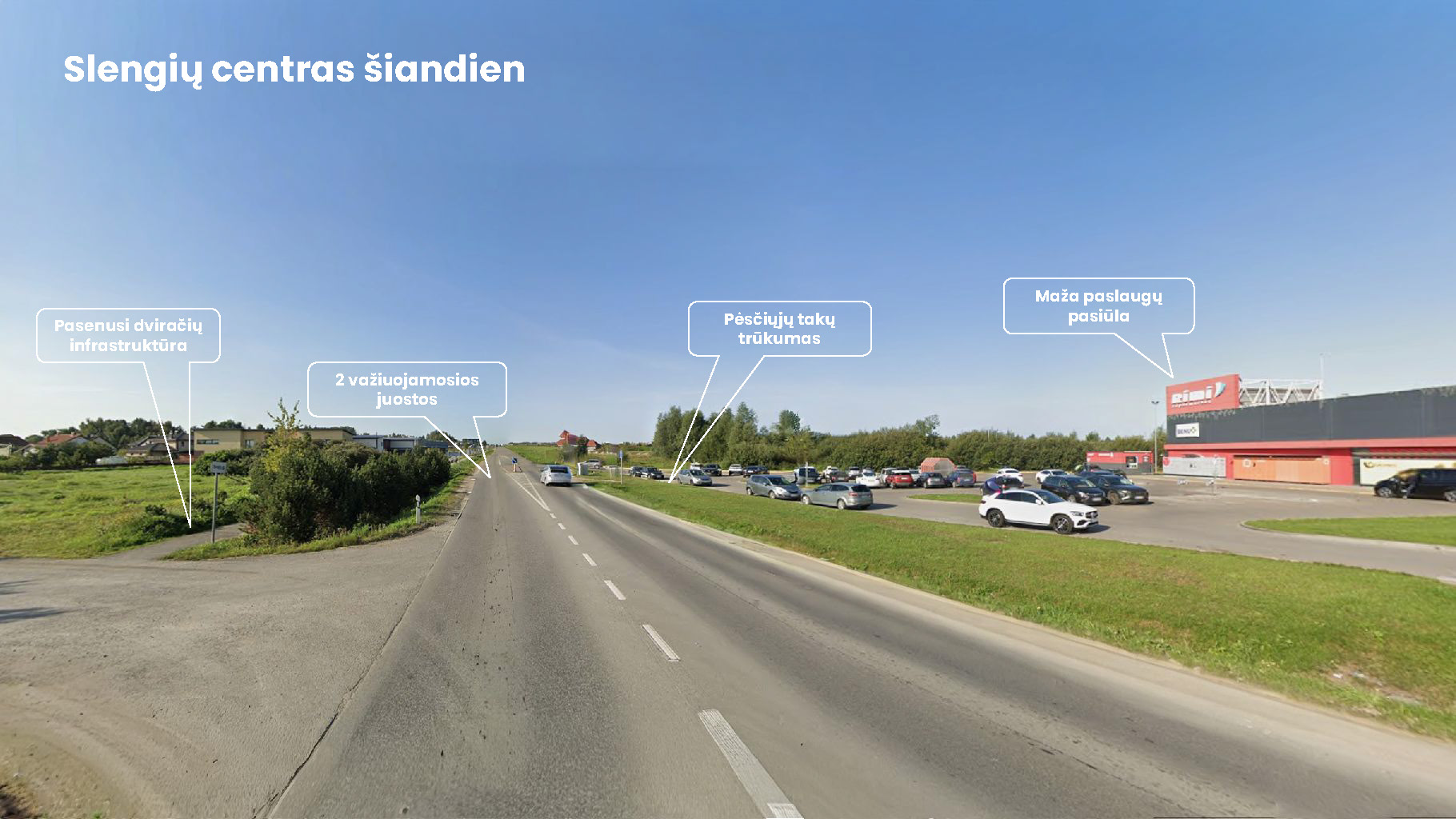
The analysis revealed that the Klaipėda District Master Plan allows for excessive development: the designated areas could accommodate several times more residents than demographic projections suggest. Although the population in suburban areas is growing rapidly, development remains sparse and fragmented, and detailed plans are often prepared for individual plots. Many settlements lack local centres, public spaces, and greenery, while social infrastructure—schools, kindergartens, and community facilities—is insufficiently developed. Mobility is largely car-oriented, with a shortage of pedestrian and cycling infrastructure as well as convenient public transport. In urbanising areas, issues related to drainage and stormwater management are becoming increasingly critical. Although the district has a strong natural framework, it is not yet sufficiently integrated into the system of recreational areas and public spaces.
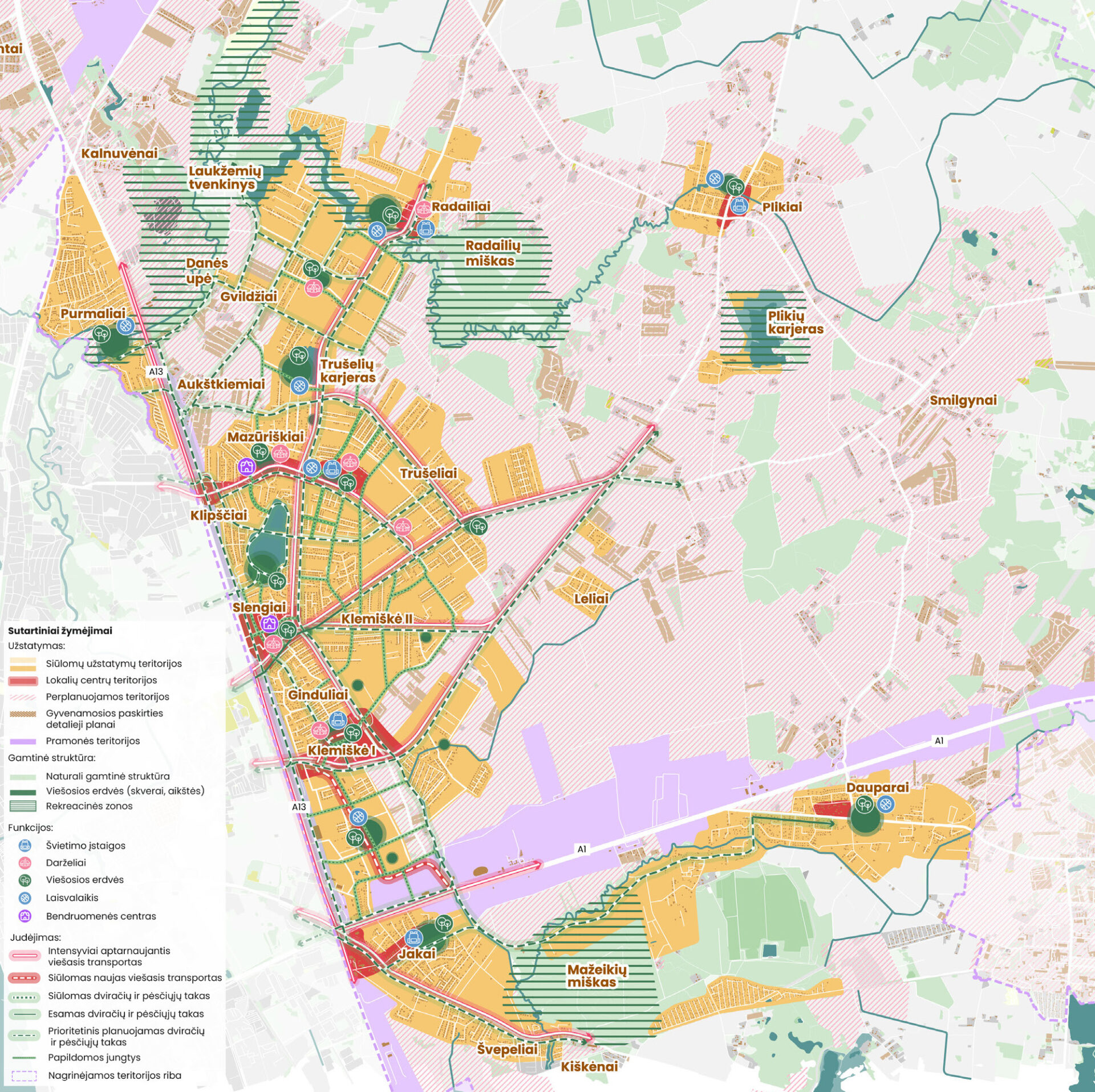
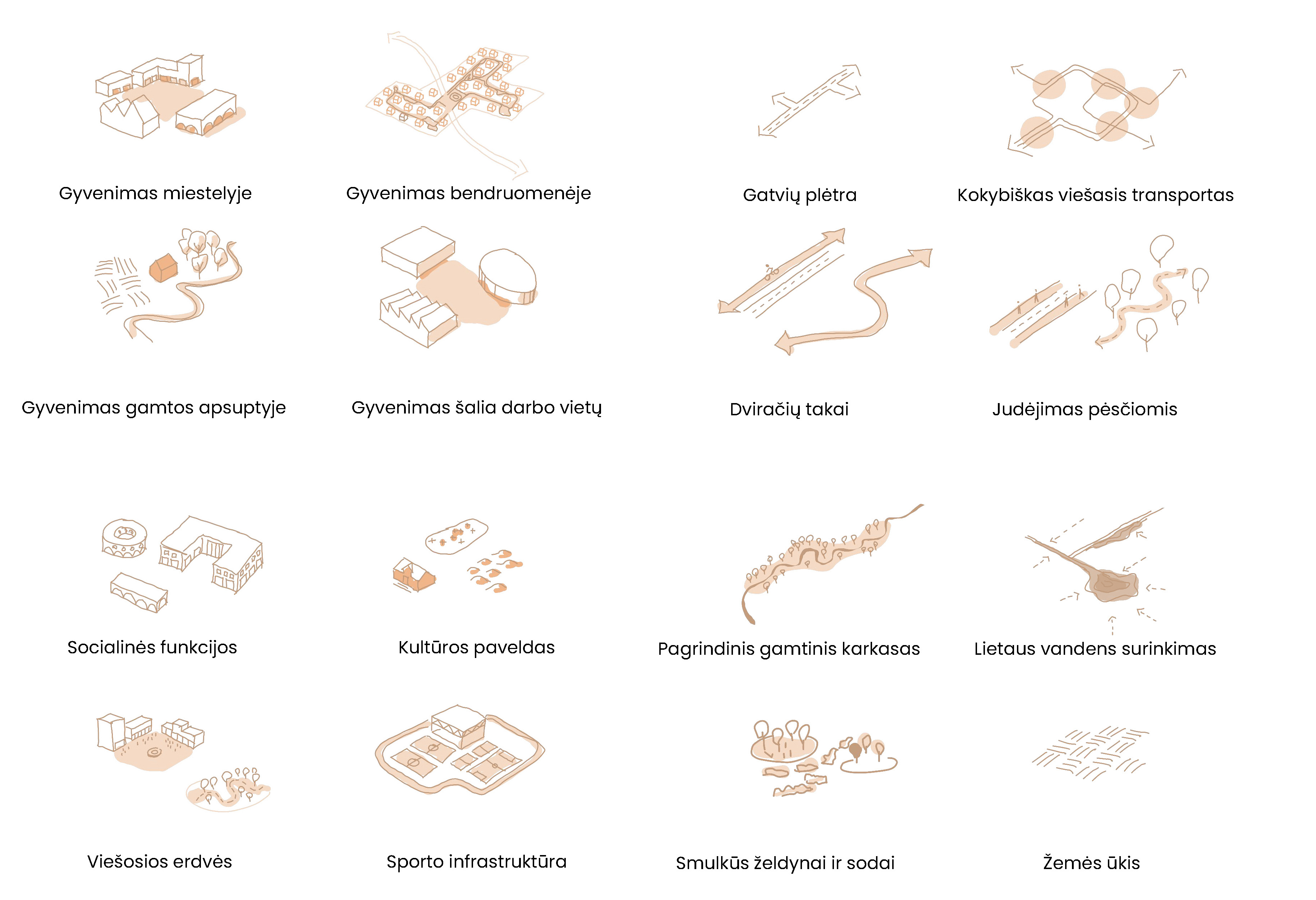
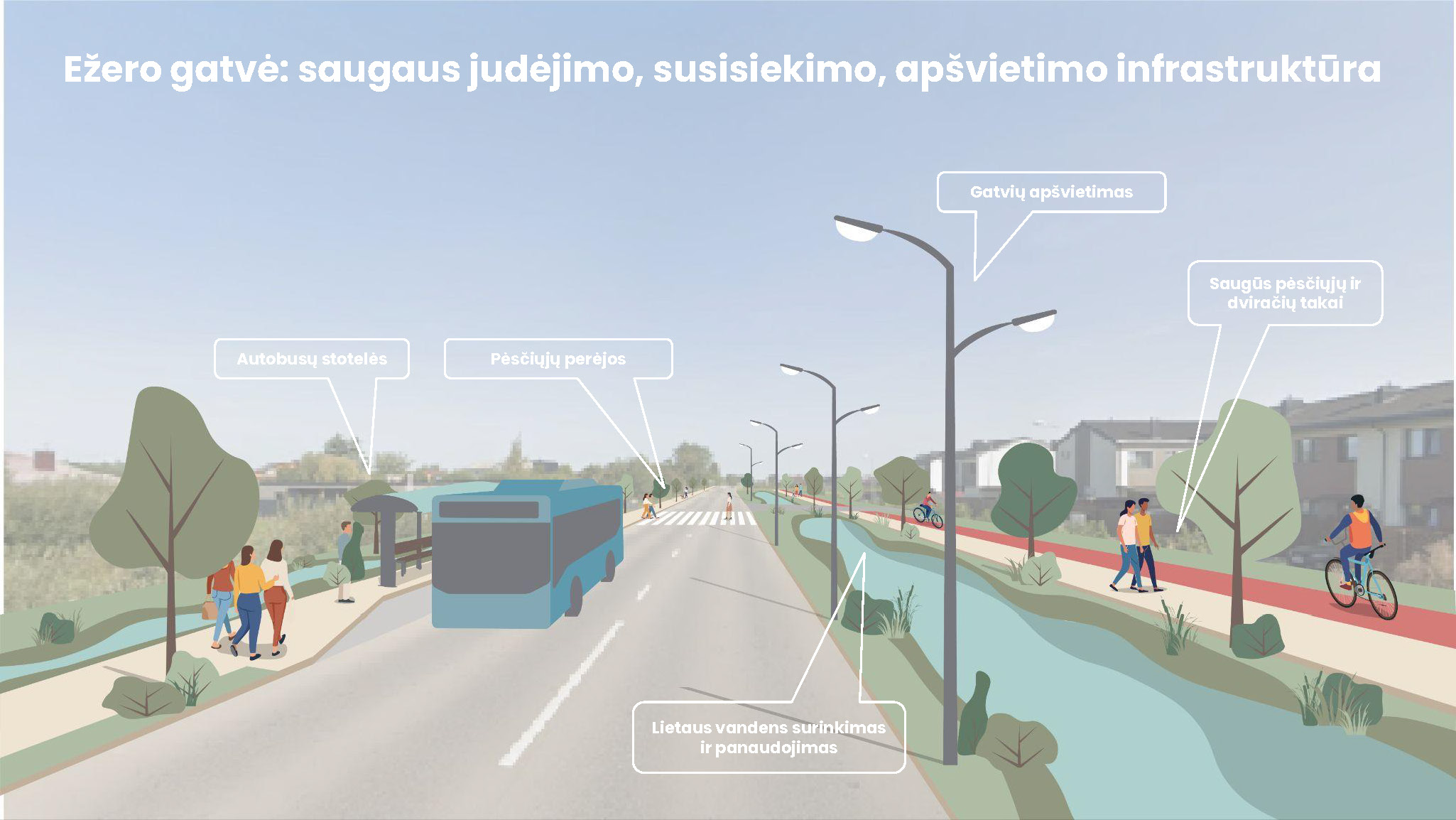
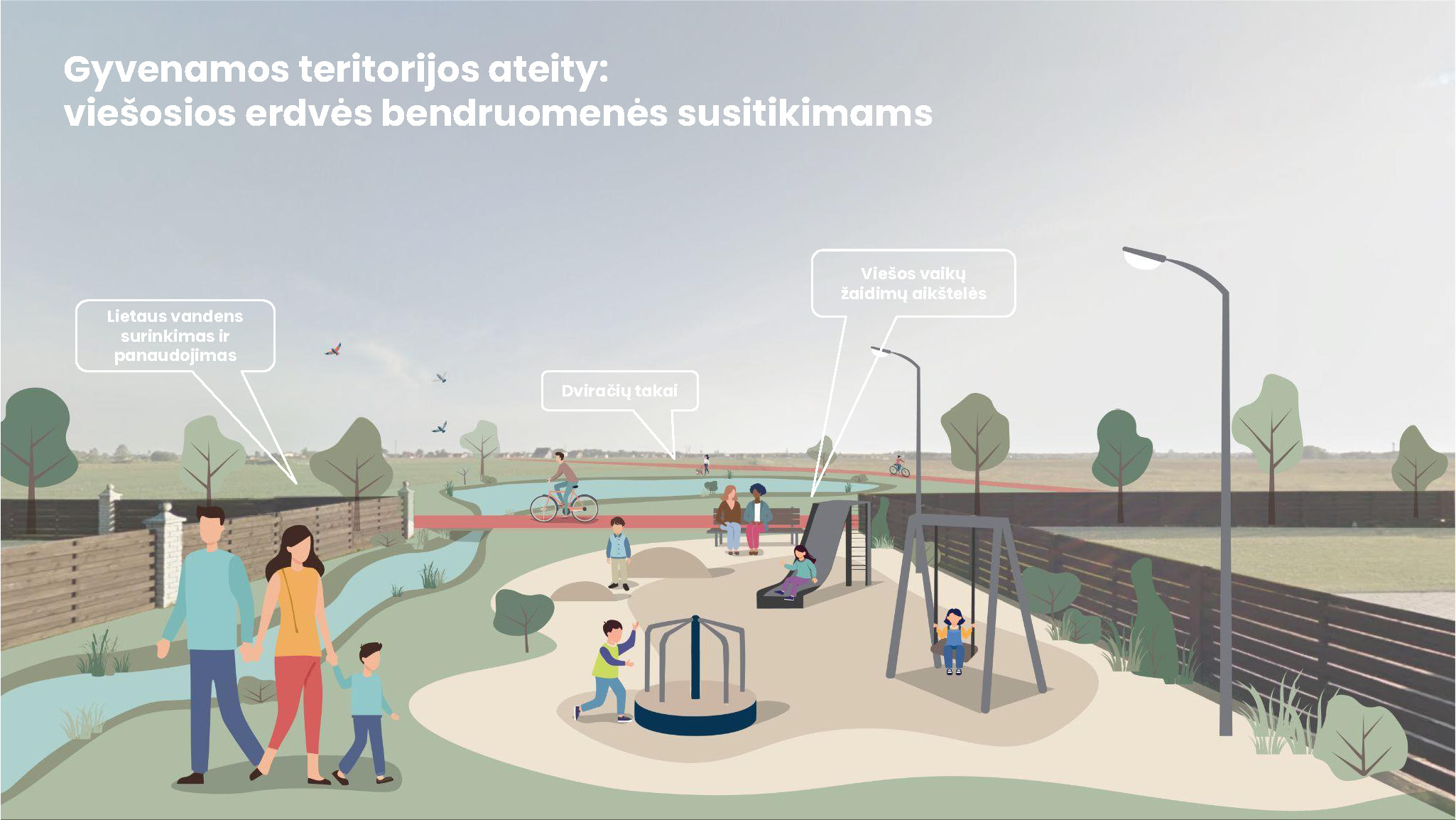
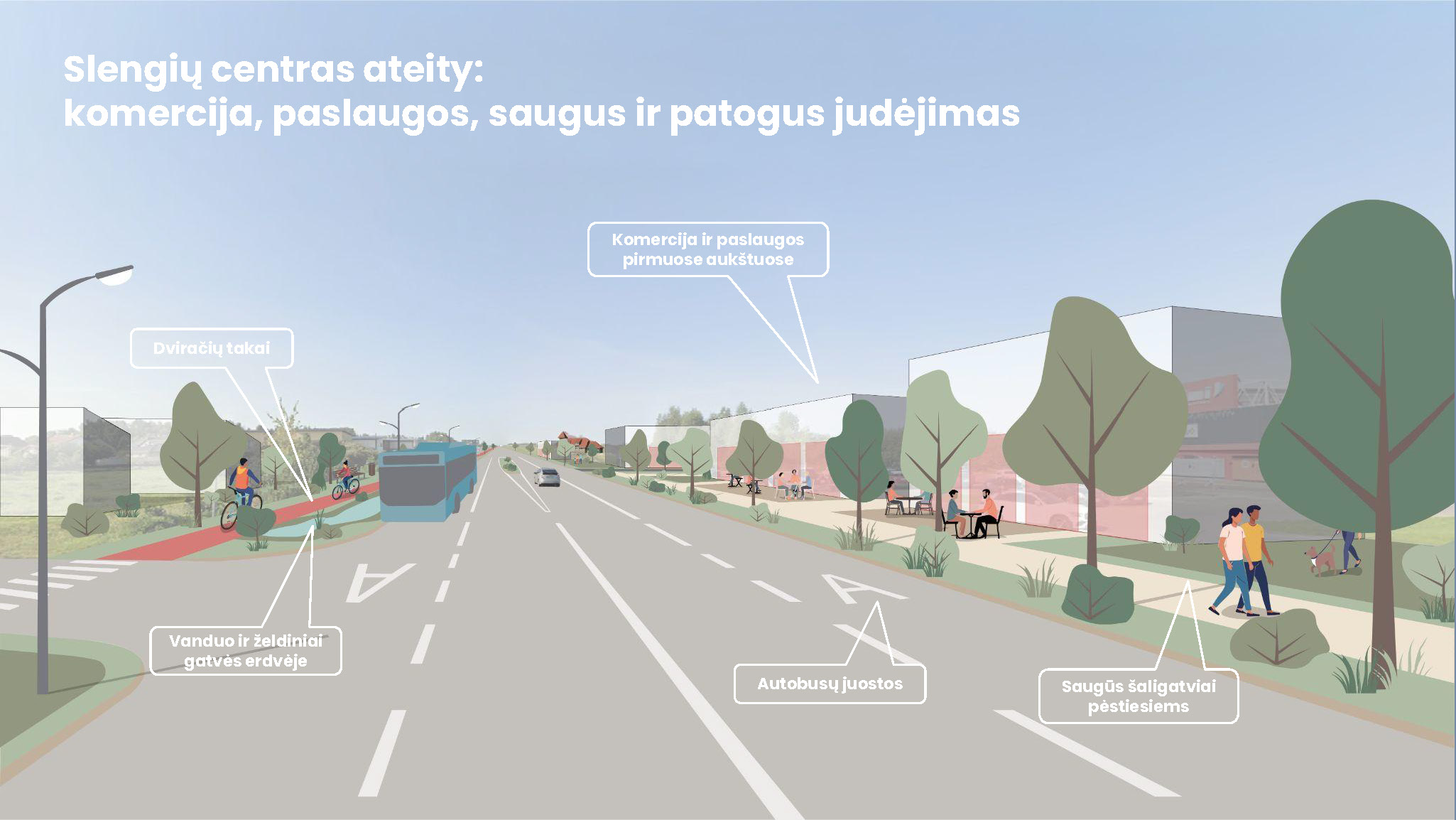
To ensure sustainable, compact, and economically efficient development of Klaipėda District, it is proposed to first limit development in non-urbanised areas and in locations distant from services, while concentrating new growth within already urbanised zones. This approach would allow for more efficient use of existing infrastructure and help avoid fragmented development. At the same time, the study proposes forming and strengthening local settlement centres, ensuring a balanced provision of social infrastructure—schools, kindergartens, and community facilities—developing sustainable mobility to reduce car dependency, and integrating the natural framework and recreational infrastructure into the overall urban structure.
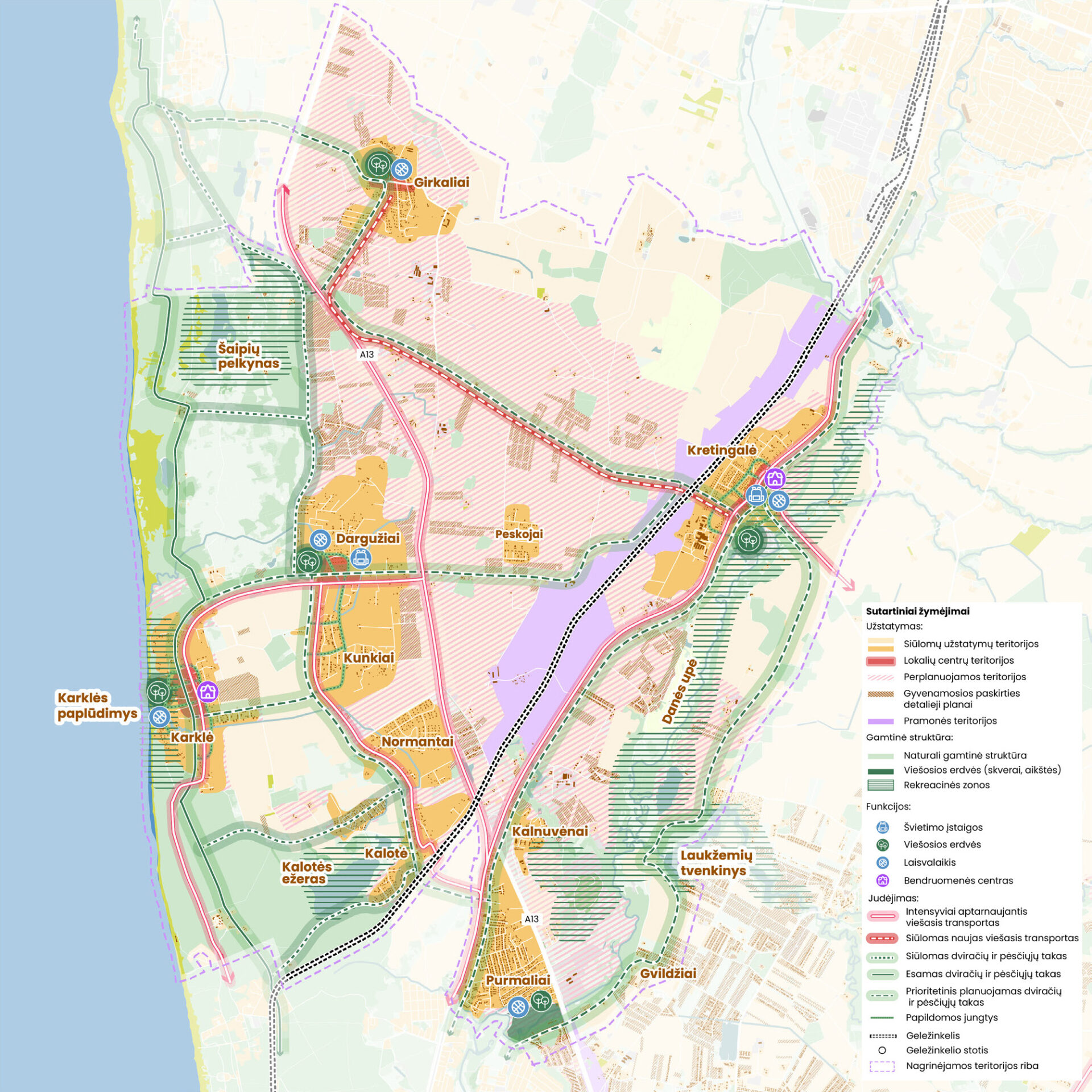
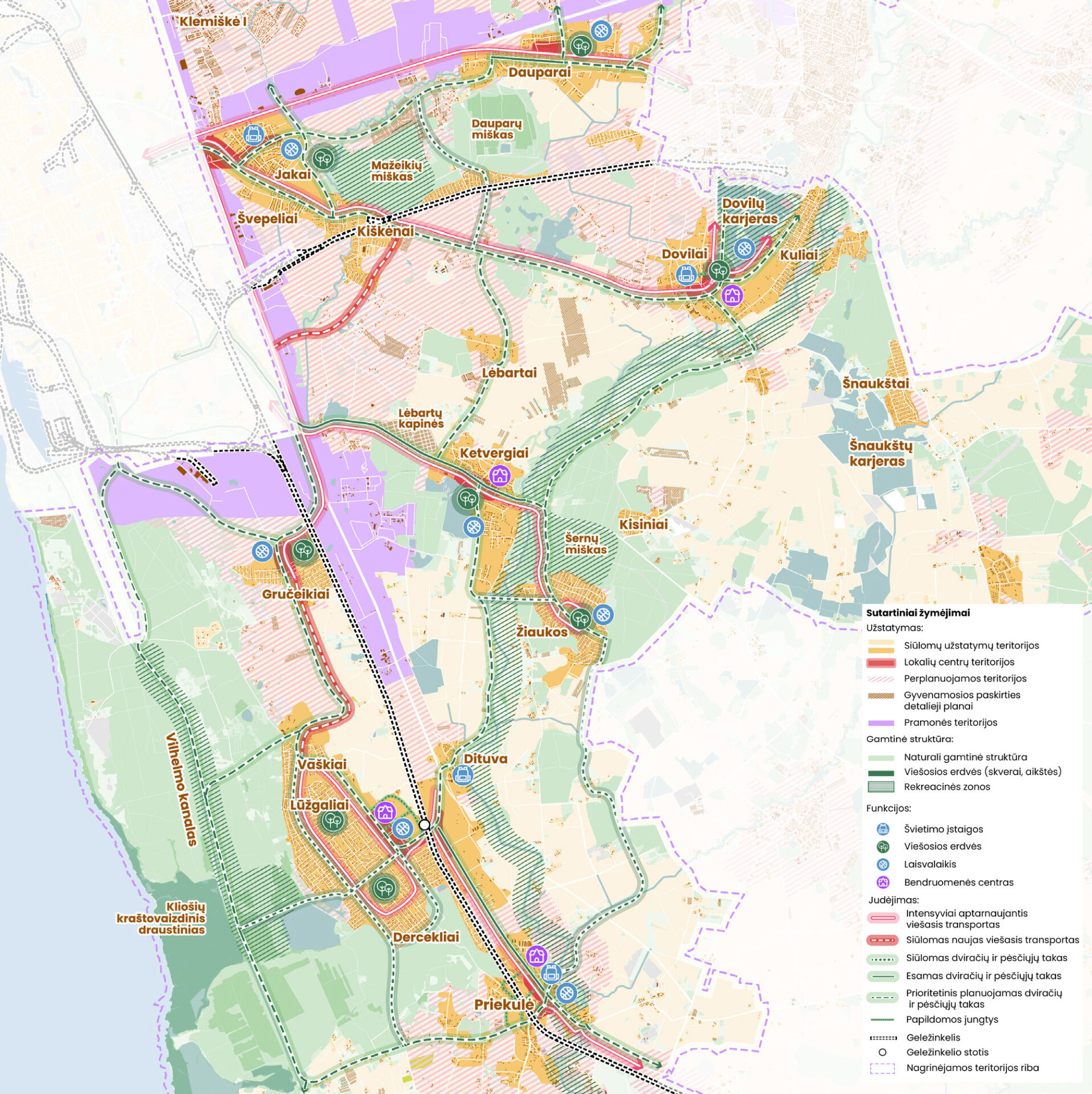
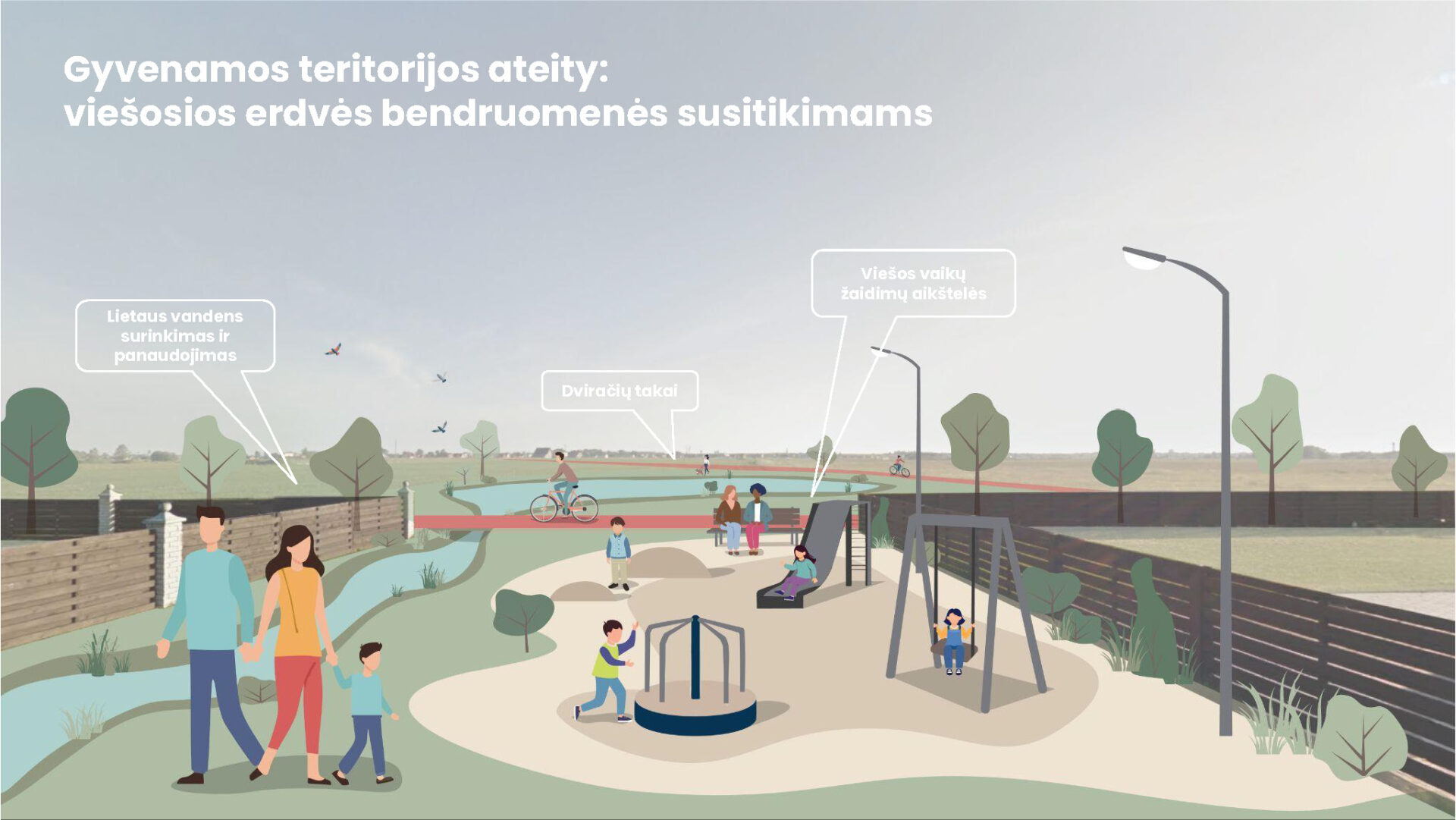
Throughout the project, residents were actively involved: a public survey was conducted with responses from 2,800 residents, and eight meetings were organised to discuss the challenges of different suburban areas and residents’ expectations, review proposed scenarios, and refine the final recommendations. Approximately 300 participants took part in these meetings.
Client: Klaipėda district municipality
Location: Klaipėda District elderships adjacent to the city of Klaipėda
Study area: 23 000 ha, 45 700 residents
Year: 2025
Project type: territorial analysis and development guidelines
Public participation: 8 public meetings, 2 850 survey respondents
Team: Justina Muliuolytė, Tadas Jonauskis, Aistė Pakamorytė, Aurėja Adomavičiūtė, Rokas Jonušas
Project reports: development recommendations here, urban analysis here